
-
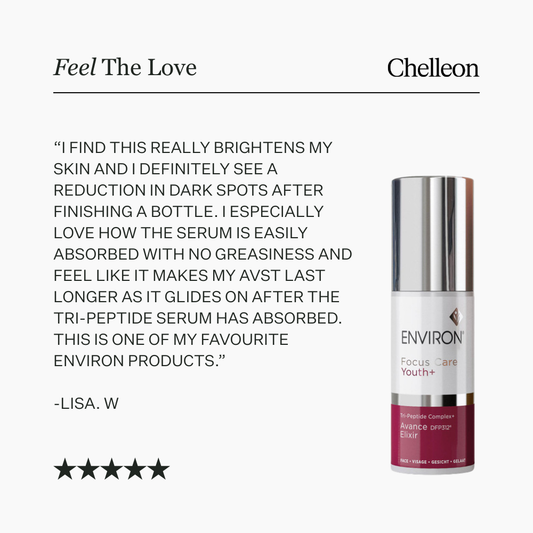
Environ Focus Care Youth+ Tri-Peptide Complex+ Avance Elixir
Vendor:EnvironRegular price £93.00Regular priceUnit price per -
Environ Youth EssentiA Vita-Peptide C-Quence Serum 4 Plus
Vendor:EnvironRegular price £118.00Regular priceUnit price per -
Environ Focus Care Moisture+ Hyaluronic Acid Intensive Hydrating Serum
Vendor:EnvironRegular price £79.00Regular priceUnit price per -
Environ Youth EssentiA C-Quence Serum 4
Vendor:EnvironRegular price £112.00Regular priceUnit price per -
Environ Focus Care Youth+ Seriénce Night Serum
Vendor:EnvironRegular price £73.00Regular priceUnit price per -
Environ Tri-Retinoid Complex Retinol Serum Forte
Vendor:EnvironRegular price £61.00Regular priceUnit price per -
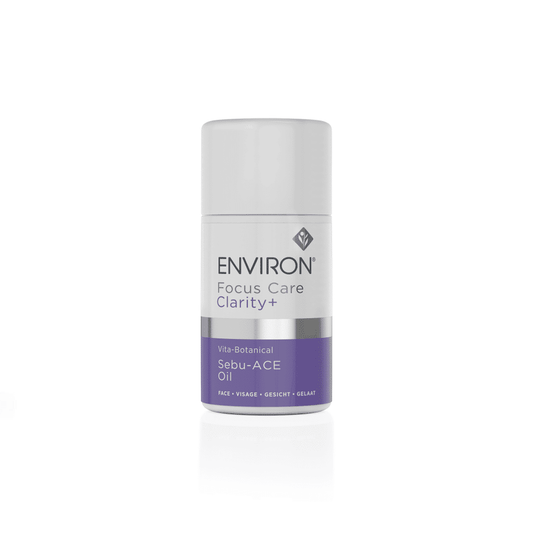
Environ Clarity+ Vita-Botanical Sebu-ACE Oil
Vendor:EnvironRegular price £42.00Regular priceUnit price per -
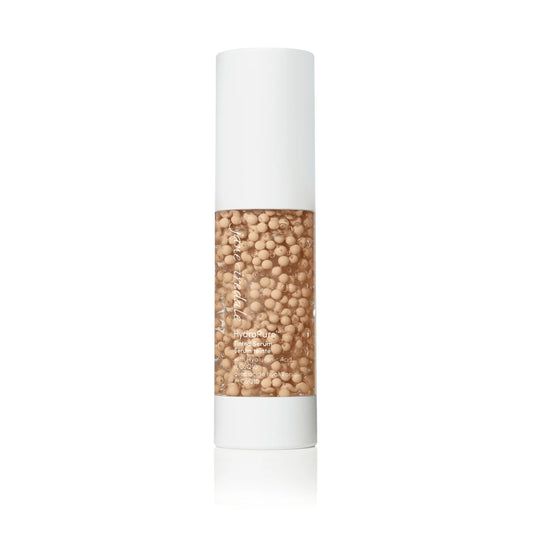
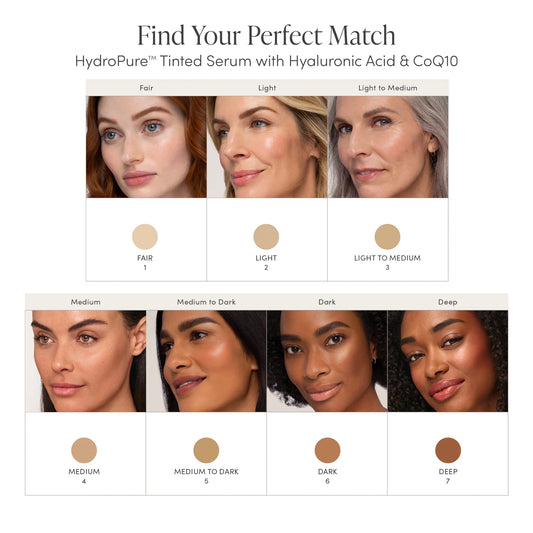
Jane Iredale HydroPure Tinted Serum with Hyaluronic Acid & CoQ10
Vendor:JANE IREDALERegular price From £50.00Regular priceUnit price per -
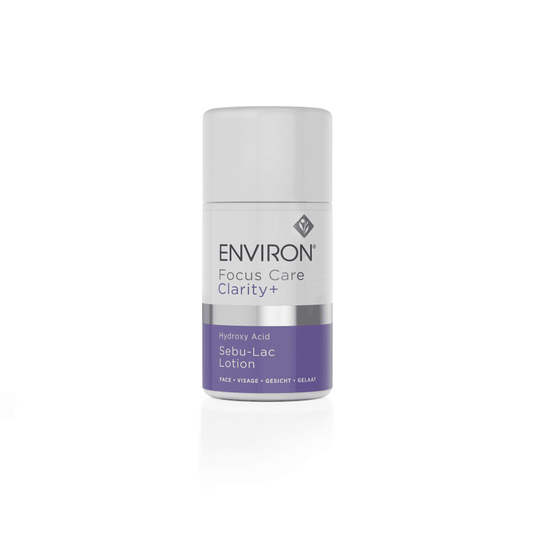
Environ Clarity+ Hydroxy Acid Sebu-LAC Lotion
Vendor:EnvironRegular price £36.00Regular priceUnit price per -
Environ Youth EssentiA C-Quence Serum 3
Vendor:EnvironRegular price £103.00Regular priceUnit price per -
Environ Youth EssentiA C-Quence Serum 2
Vendor:EnvironRegular price £103.00Regular priceUnit price per -
Environ Youth EssentiA C-Quence Serum 1
Vendor:EnvironRegular price £103.00Regular priceUnit price per -
Environ Focus Care Youth+ Peptide Enriched Frown Serum
Vendor:EnvironRegular price £138.00Regular priceUnit price per -
Environ Vita-Botanical Mela-Fade Serum System
Vendor:EnvironRegular price £73.00Regular priceUnit price per -
Environ Tri-Retinoid Complex Retinol Serum
Vendor:EnvironRegular price £53.00Regular priceUnit price per -
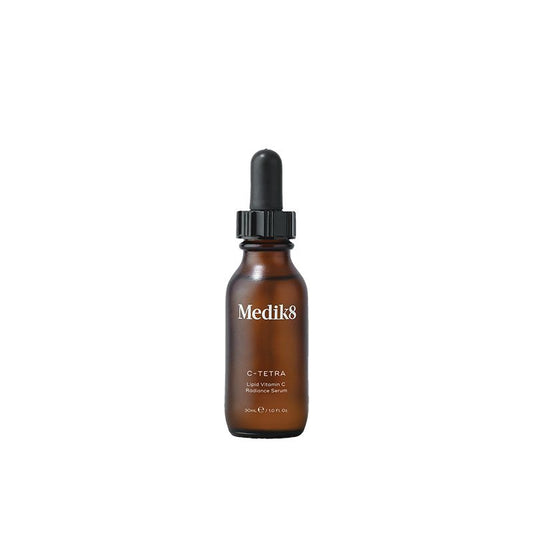
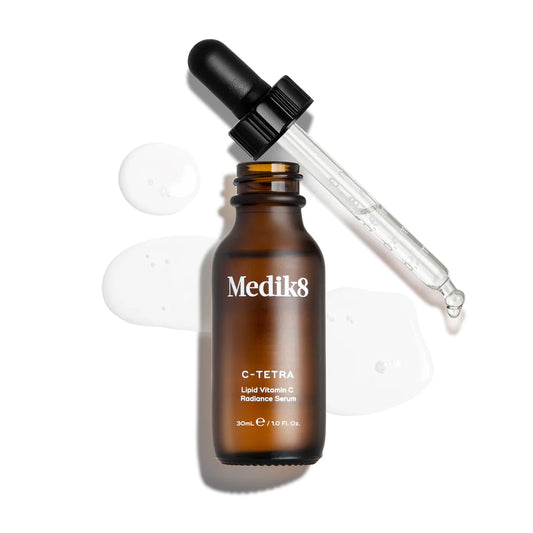
Medik8 C-Tetra®
Vendor:MEDIK8Regular price £39.00Regular priceUnit price per -
RevitaLash® Advanced Eyelash Serum (Conditioner) 3.5ml
Vendor:RevitalashRegular price £112.00Regular priceUnit price per -
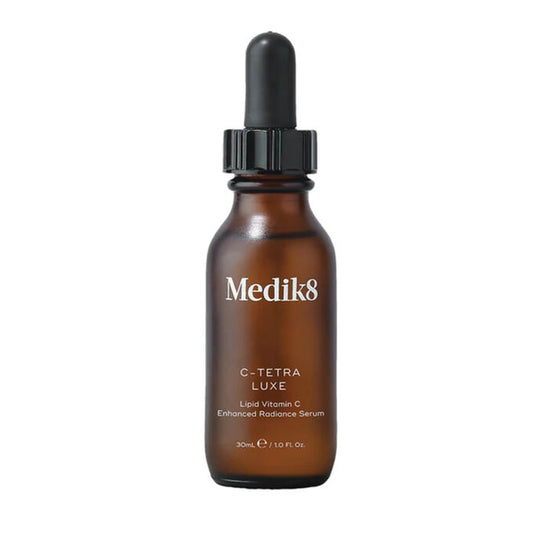
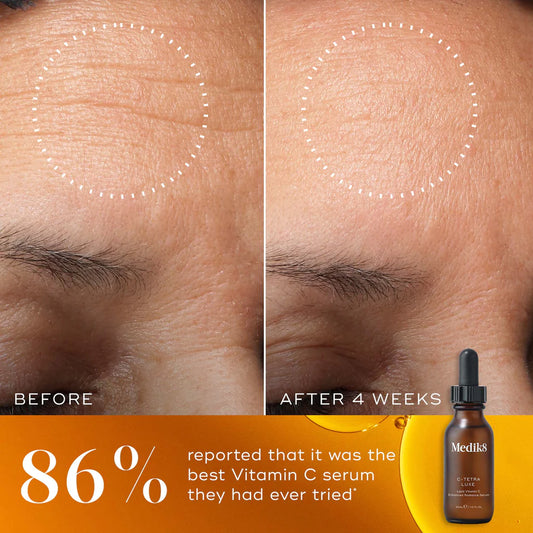
Medik8 C-Tetra® Luxe
Vendor:MEDIK8Regular price £59.00Regular priceUnit price per -
Medik8 C-Tetra® - Try Me / Travel Size
Vendor:MEDIK8Regular price £14.00Regular priceUnit price per -
Medik8 Liquid Peptides - Travel Size 8ml
Vendor:MEDIK8Regular price £19.00Regular priceUnit price per -
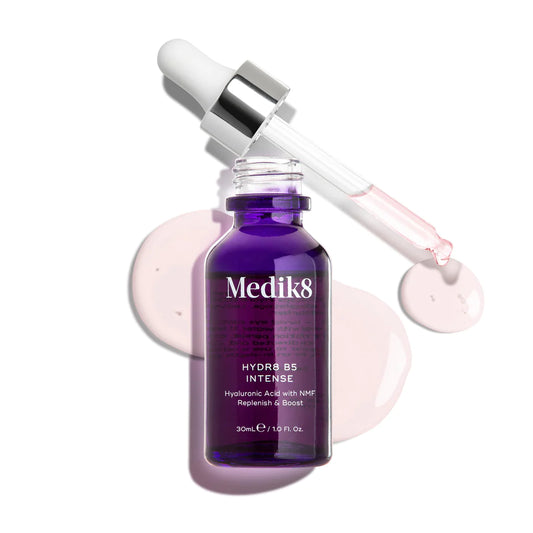
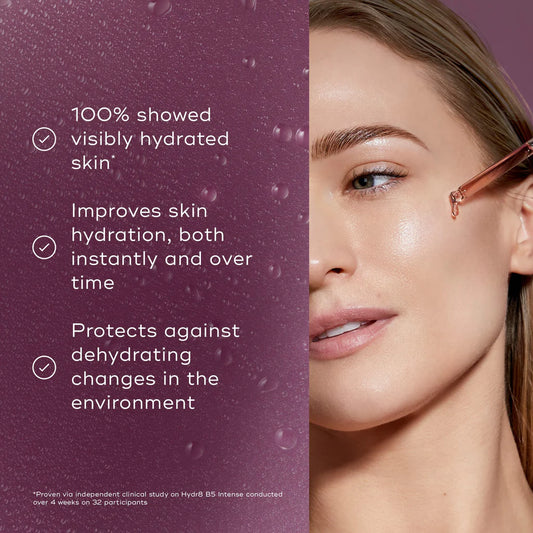
Medik8 Hydr8 B5 Intense
Vendor:MEDIK8Regular price £59.00Regular priceUnit price per -
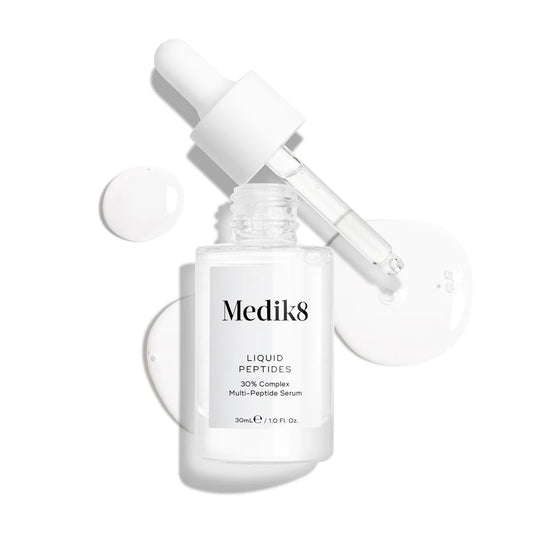
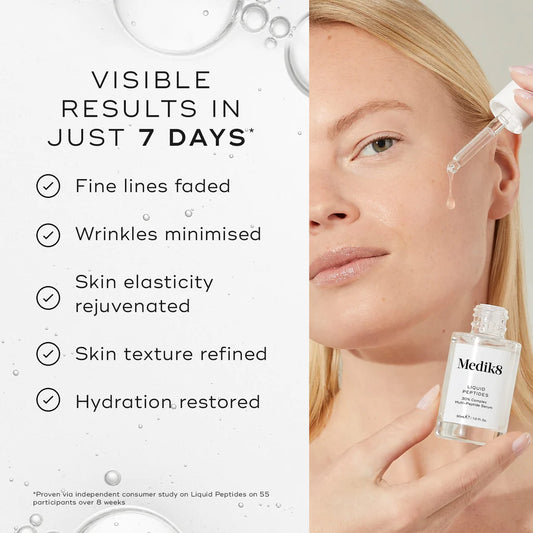
Medik8 Liquid Peptides
Vendor:MEDIK8Regular price £55.00Regular priceUnit price per -
 Sold out
Medik8 Copper PCA Peptides™
Vendor:MEDIK8Regular price £55.25Regular priceUnit price per£65.00Sale price £55.25Sold out -
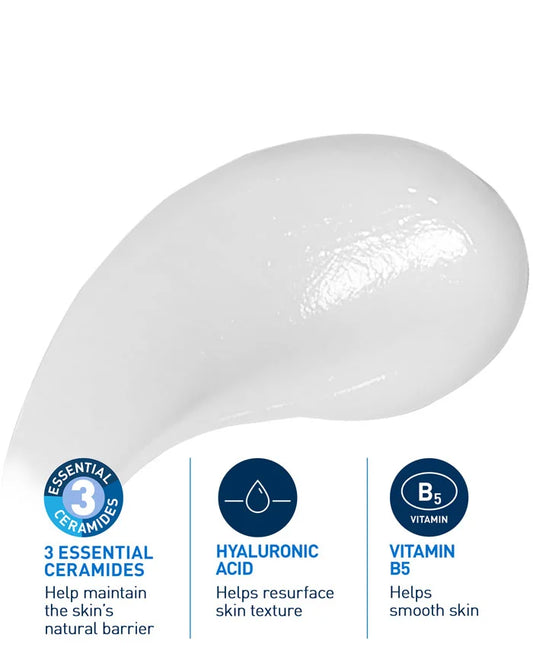
CeraVe Hydrating Hyaluronic Acid Serum
Vendor:CeraVeRegular price £19.45Regular priceUnit price per













Frequently Asked Questions
Which face serum should I use?
Choose one that matches your main priority: vitamin C for radiance, hyaluronic acid for hydration, niacinamide for barrier and oil-balance support, peptides for smoother-looking skin, or a cosmetic retinoid for texture and visible ageing. Formula and tolerance matter more than collecting multiple actives.
When should I apply face serum?
Most water-based serums are applied after cleansing and toner and before moisturiser. Facial oils usually come after water-based steps. Use sunscreen last in the morning. Follow the product directions if they specify a different order.
Can I use more than one serum?
Yes, but it is rarely necessary to start several at once. Combine complementary gentle products, or use different serums in the morning and evening. Avoid introducing multiple strong acids or retinoids together, because irritation becomes more likely and harder to trace.
What is the difference between face serum and facial oil?
Serums are usually lightweight water- or silicone-based products focused on specific ingredients. Facial oils are lipid-based and primarily add emollience and help reduce moisture loss. Either can contain active ingredients, so check the formula rather than relying only on texture.
Do I need moisturiser after serum?
Most routines benefit from moisturiser because it adds emollience and helps reduce water loss. A very moisturising serum may feel sufficient for some oily skin, but serum and moisturiser are not automatically interchangeable. Adjust texture rather than skipping barrier support by rule.
Can I use vitamin C and retinol in the same routine?
Some skin tolerates both, but many people find it easier to use vitamin C in the morning and retinol at night. Introduce them separately, reduce frequency if irritation develops and use daily sunscreen. Follow the exact directions for each formula.
How long does a face serum take to work?
Hydration and surface comfort may improve quickly, while visible changes in tone, texture or lines usually require consistent use over several weeks or longer. Results vary by product and concern. Stop and reassess if irritation persists rather than assuming discomfort means the serum is working.
Notes On Skincare
-

Fernblock®: the ingredient that makes Heliocare...
What is Fernblock® and why does it matter? A deep dive into the fern extract behind Heliocare 360°, the science, and why it's a genuine differentiator.
Fernblock®: the ingredient that makes Heliocare...
What is Fernblock® and why does it matter? A deep dive into the fern extract behind Heliocare 360°, the science, and why it's a genuine differentiator.
-

Heliocare 360°: Which SPF Is Right For Your Ski...
Our Heliocare 360° review breaks down every SPF50 formula by skin type, compares 360° vs Advanced, and helps you find your perfect match.
Heliocare 360°: Which SPF Is Right For Your Ski...
Our Heliocare 360° review breaks down every SPF50 formula by skin type, compares 360° vs Advanced, and helps you find your perfect match.
-

Why Perimenopause Can Feel Like a Second Adoles...
Breakouts and fine lines at the same time?! The wonderful world of perimenopause.
Why Perimenopause Can Feel Like a Second Adoles...
Breakouts and fine lines at the same time?! The wonderful world of perimenopause.


Let customers speak for us

Been using AVST moisturiser for couple years now vombined with AVSTSupet moisturiser plus and such a Difference it has made to my
once sensitive reactive skin

Have used for years and will continue using

Have used for years and would not give up using however

I use all Jane Iredale products the blusher is gorgeous like all of her products good for sensitive skin goes on smoothly.

Love this eye shadow goes on smoothly lovely colours ,good for my sensitive eyes like all Jane Iredale products.

Great suppliments and so easy to use

Great for softening lines around eyes

Makes skin a lot clearer of pigmentation

So easy to apply a smooth line with this pencil. I have tried propelling eye liner pencils but they break so easily.

I have used this primer for some time now and wouldn’t use any other. Makes putting make up on so much easier.

You can really fell the difference straight away from using this product. It leaves your skin feeling clean, clear and soft.

Love this product. It’s soft on your skin and leaves your skin feeling amazing and clean.

Great company fast snd efficient

Been using this for years, an absolutely amazing product! So good for healing and reducing redness on scars and damaged skin.

Great compact , to replace a broken different style one , very quick postage and value for money thank you