
-
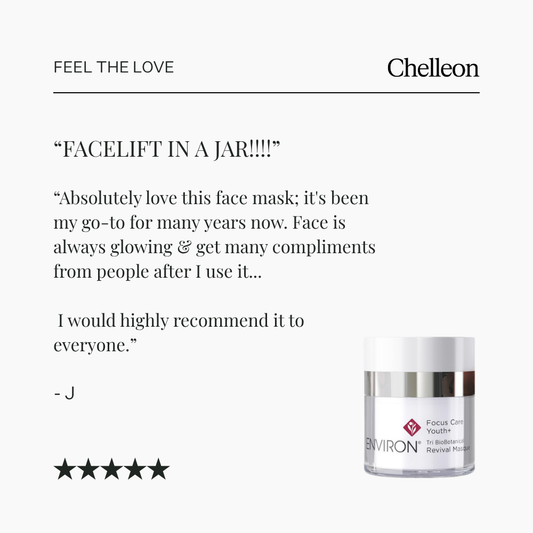
Environ Focus Care Youth+ Tri-Biobotanical Revival Masque
Vendor:EnvironRegular price £66.00Regular priceUnit price per -
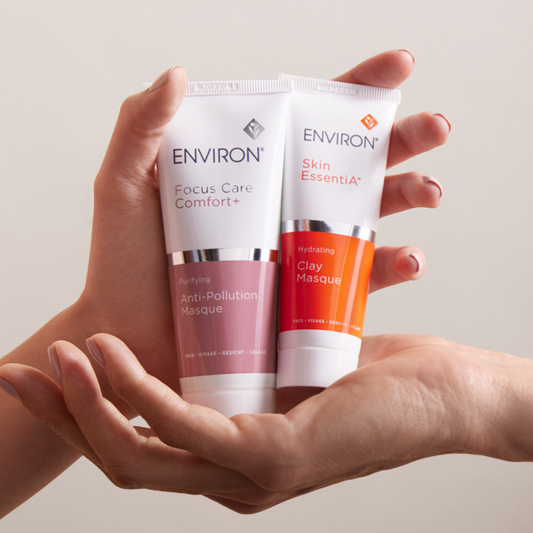
Environ Skin EssentiA Clay Masque
Vendor:EnvironRegular price £38.00Regular priceUnit price per -
Environ Focus Care Youth+ Concentrated Alpha Hydroxy Toner
Vendor:EnvironRegular price £47.00Regular priceUnit price per -
Environ Focus Care Moisture+ Alpha Hydroxy Night Cream
Vendor:EnvironRegular price £46.00Regular priceUnit price per -
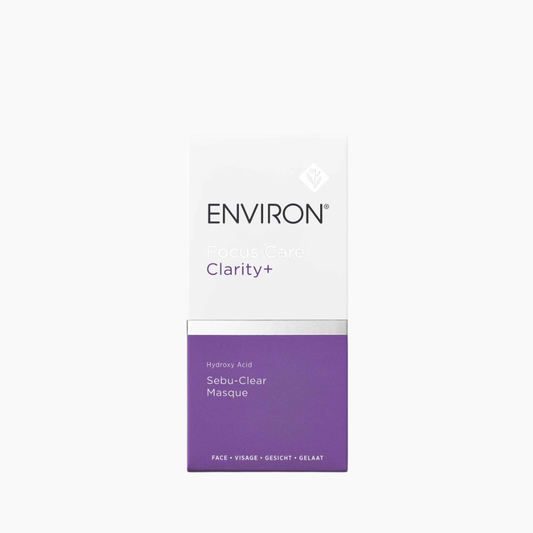
Environ Clarity+ Hydroxy Acid Sebu-Clear Masque
Vendor:EnvironRegular price £47.00Regular priceUnit price per -
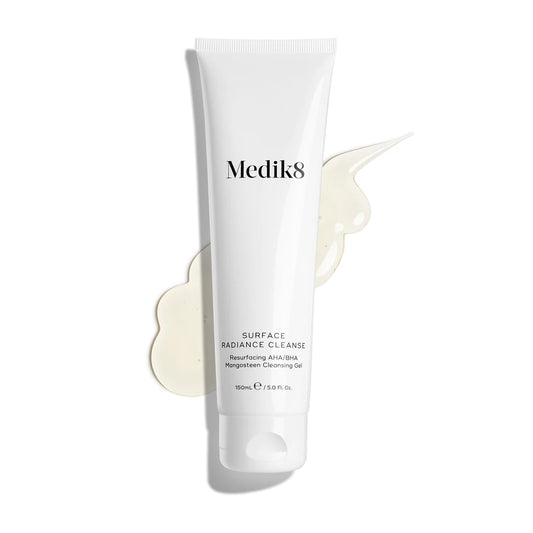
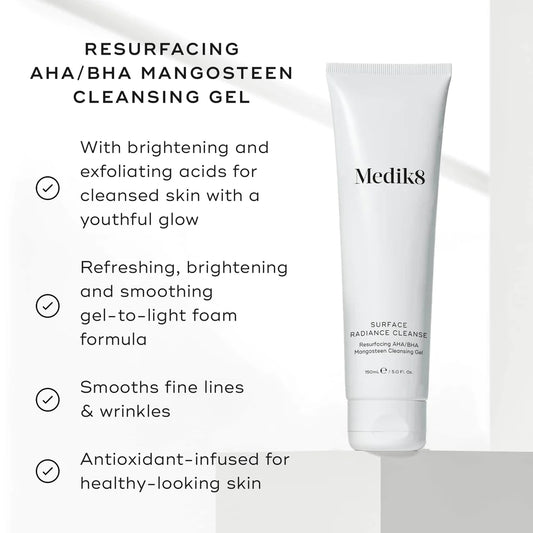
Medik8 Surface Radiance Cleanse
Vendor:MEDIK8Regular price £24.00Regular priceUnit price per -
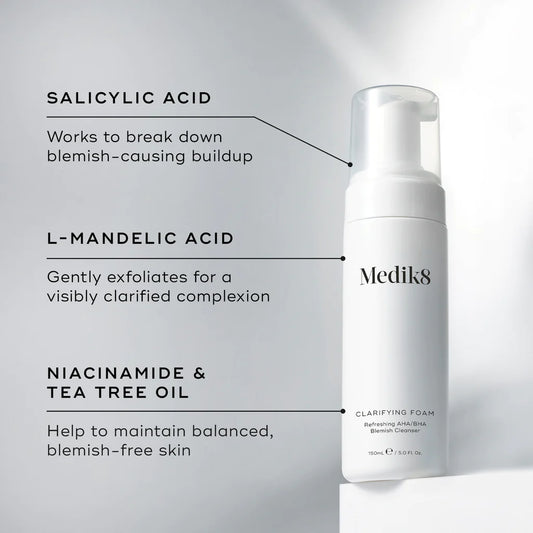
Medik8 Clarifying Foam
Vendor:MEDIK8Regular price £24.00Regular priceUnit price per




Frequently Asked Questions
Which type of face exfoliator should I use?
AHAs often suit dullness and rough surface texture; salicylic acid is useful for oily or congested-looking pores; enzymes or a mild rinse-off formula may suit people wanting a gentler start. Choose one product, follow its directions and adjust according to tolerance.
How often should I exfoliate my face?
Start at the lowest frequency on the product directions, often once or twice weekly for a new leave-on or peel. Some mild formulas are designed for more frequent use. Reduce or stop if tightness, burning, redness or flaking develops.
Can I use an exfoliator and retinol together?
Some experienced users tolerate both, but using them on the same evening can be irritating. Introduce one first and consider alternate nights. Follow the product's specific guidance, and simplify if the skin becomes persistently uncomfortable.
What is the difference between AHA and BHA?
AHAs such as glycolic and lactic acid mainly exfoliate the skin surface and are commonly chosen for dullness and texture. BHA usually refers to salicylic acid, which is oil-soluble and useful for congested-looking pores. Neither is universally stronger or better.
Is an at-home peel the same as a professional chemical peel?
No. Home cosmetic peels are formulated for consumer use with specific directions. Professional peels may use different acids, strengths and safety protocols. Do not extend contact time or combine products to imitate a clinic procedure.
Can sensitive skin be exfoliated?
Some sensitive skin tolerates mild, infrequent exfoliation when settled, but it is optional. Avoid exfoliation during a flare or when skin is burning, cracked or persistently red. Patch test and choose a gentle formula; rosacea or dermatitis may require professional guidance.
Why is sunscreen important when exfoliating?
Exfoliation does not replace sun protection, and some exfoliating routines can make skin more vulnerable to irritation from exposure. Use broad-spectrum SPF 30 or higher each morning and follow reapplication guidance, especially when outdoors.
Notes On Skincare
-

Fernblock®: the ingredient that makes Heliocare...
What is Fernblock® and why does it matter? A deep dive into the fern extract behind Heliocare 360°, the science, and why it's a genuine differentiator.
Fernblock®: the ingredient that makes Heliocare...
What is Fernblock® and why does it matter? A deep dive into the fern extract behind Heliocare 360°, the science, and why it's a genuine differentiator.
-

Heliocare 360°: Which SPF Is Right For Your Ski...
Our Heliocare 360° review breaks down every SPF50 formula by skin type, compares 360° vs Advanced, and helps you find your perfect match.
Heliocare 360°: Which SPF Is Right For Your Ski...
Our Heliocare 360° review breaks down every SPF50 formula by skin type, compares 360° vs Advanced, and helps you find your perfect match.
-

Why Perimenopause Can Feel Like a Second Adoles...
Breakouts and fine lines at the same time?! The wonderful world of perimenopause.
Why Perimenopause Can Feel Like a Second Adoles...
Breakouts and fine lines at the same time?! The wonderful world of perimenopause.


Let customers speak for us

Excellent product, used it for ages

I absolutely love this moisturiser! It leaves my skin feeling beautifully hydrated, soft and nourished without feeling heavy or greasy. My complexion looks smoother and more radiant, and it has become an essential part of my daily skincare routine. A little goes a long way, and I love how my skin feels after applying it. A beautiful product that I would happily recommend! 🥰

Very good
Love this skincare have been using it for years!

Excellent product which I have been using for years

Excellent products which enhance the quality and appearance of the skin

Been using AVST moisturiser for couple years now vombined with AVSTSupet moisturiser plus and such a Difference it has made to my
once sensitive reactive skin

Have used for years and will continue using

Have used for years and would not give up using however

I use all Jane Iredale products the blusher is gorgeous like all of her products good for sensitive skin goes on smoothly.

Love this eye shadow goes on smoothly lovely colours ,good for my sensitive eyes like all Jane Iredale products.

Great suppliments and so easy to use

Great for softening lines around eyes

Makes skin a lot clearer of pigmentation

So easy to apply a smooth line with this pencil. I have tried propelling eye liner pencils but they break so easily.